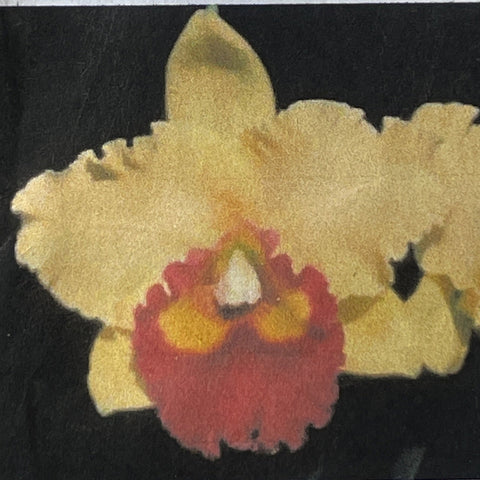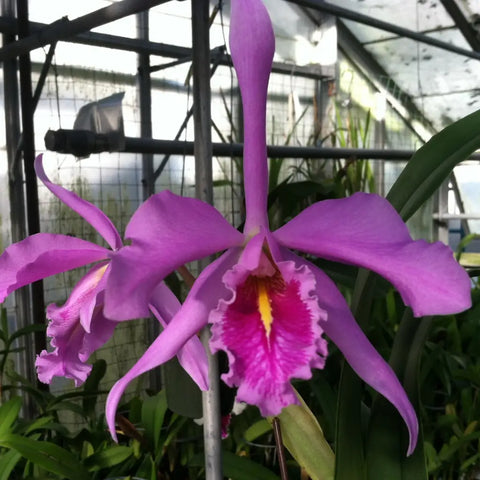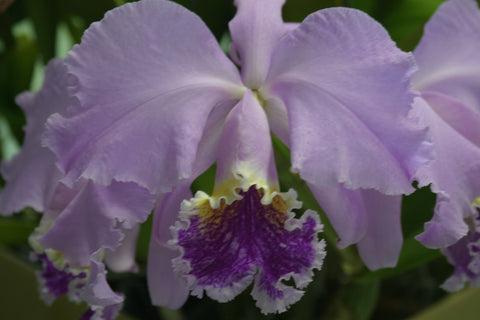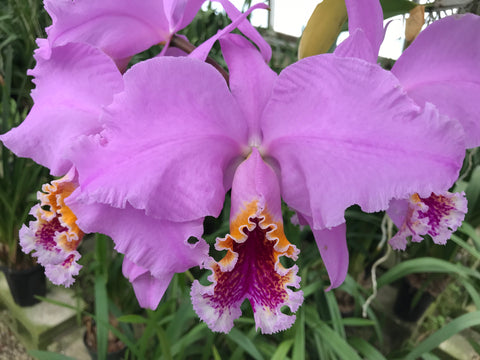
C. mossiae `Ed Patterson' (species) Meristem Orchid 2.5" Pot,
One of the best of all time. I think this is probably my favorite mossiae. Flowers are full and flat with a very nice petal stance.
- 2.5" Pot,
- 3 Years to blooming size
- Late Winter/Spring Bloomer
Culture
Light is the most important factor in growing and flowering s, whether in a greenhouse or in the home. Bright light to some sun should be given to the , with no direct sun in the middle of the day. This means an eastShaded south (as with a sheer curtain) or west window in the home, and 50 to 70 percent full sun in a greenhouse (3,000 to 5,000 foot-candles). Leaves should be a medium green color, pseudobulbs erect and requiring no staking.
Temperatures should be 55 to 60 F at night and 70 to 85 F during the day. Seedlings should have night temperatures five to 10 degrees higher. A 15- to 20-degree differential between day and night is recommended, especially for mature . Higher day temperatures can be tolerated (up to 95 F), if humidity, air circulation and shading are increased.
Water should be provided in two ways: in the Pot, by watering and in the air as humidity. Watering in the container is dictated by many criteria: size and type of the vessel, temperature, light, etc. Mature s need to dry out thoroughly before being watered again. Seedlings need more constant moisture. Compare the weight of a dry Pot, of the same size and type of mix; it can indicate if a plant needs water by the relative weight - light means dryHeavy means wet. If in doubt, it's best to wait a day or two until watering. in active growth need more water than that are resting. Water below 50 F may injure , as will water softened by the addition of salts.
Humidity should be 50 to 80 percent for s. This can be provided in the home by placing the on trays of gravel, only partially filled with water so that the do not sit in the water. Air should always be moving around the to prevent fungal or bacterial disease, especially if high humidity or cool temperatures exist. In the greenhouse, the humidity is best increased by use of a humidifier. Evaporative cooling increases humidity while cooling the air.
Fertilize on a regular schedule. In fir bark, a high-nitrogen (such as 30-10-10) formulation, or a similar proportion, is used. Otherwise, use a balanced fertilizer. When in active growth, need fertilizer at least every two weeks, and when not actively growing, once a month. Fertilizer can also be applied with every watering at one-quarter the recommended dilution. Thorough flushing with clear water every month is recommended to prevent the buildup of fertilizer salts.
Pot, ting is necessary when the rhizome of the protrudes over the edge of the Pot, or the Pot, ting medium starts to break down and drain poorly (usually after two to three years). It is best to rePot, just before new roots sprout from the rhizome, after flowering or in the spring. Mature s are usually Pot, ted in coarser Pot, ting material than are Seedlings. Until a plant has at least six mature pseudobulbs, it generally should be put into a larger Pot, and not divided. If dividing a plant, three to five pseudobulbs per division are required. Select a Pot, that will allow for approximately two years of growth before crowding the Pot, . Pile mix against one side of the Pot, and cut off any dead roots. Spread the firm, live roots over the pile, with the cut rhizome against the side of the Pot, . Fill the Pot, with medium, working it around the roots. Pack firmly and stake if necessary. Keep the plant humidShaded and dry at the roots until new root growth is seen.
We Also Recommend